
In the last five years, the number of private start-up companies pursuing fusion energy has increased ten-fold. They promise a variety of outcomes – from cheap and abundant dispatchable clean energy to world peace – if you’ll only open your wallet and help them keep the lights on.
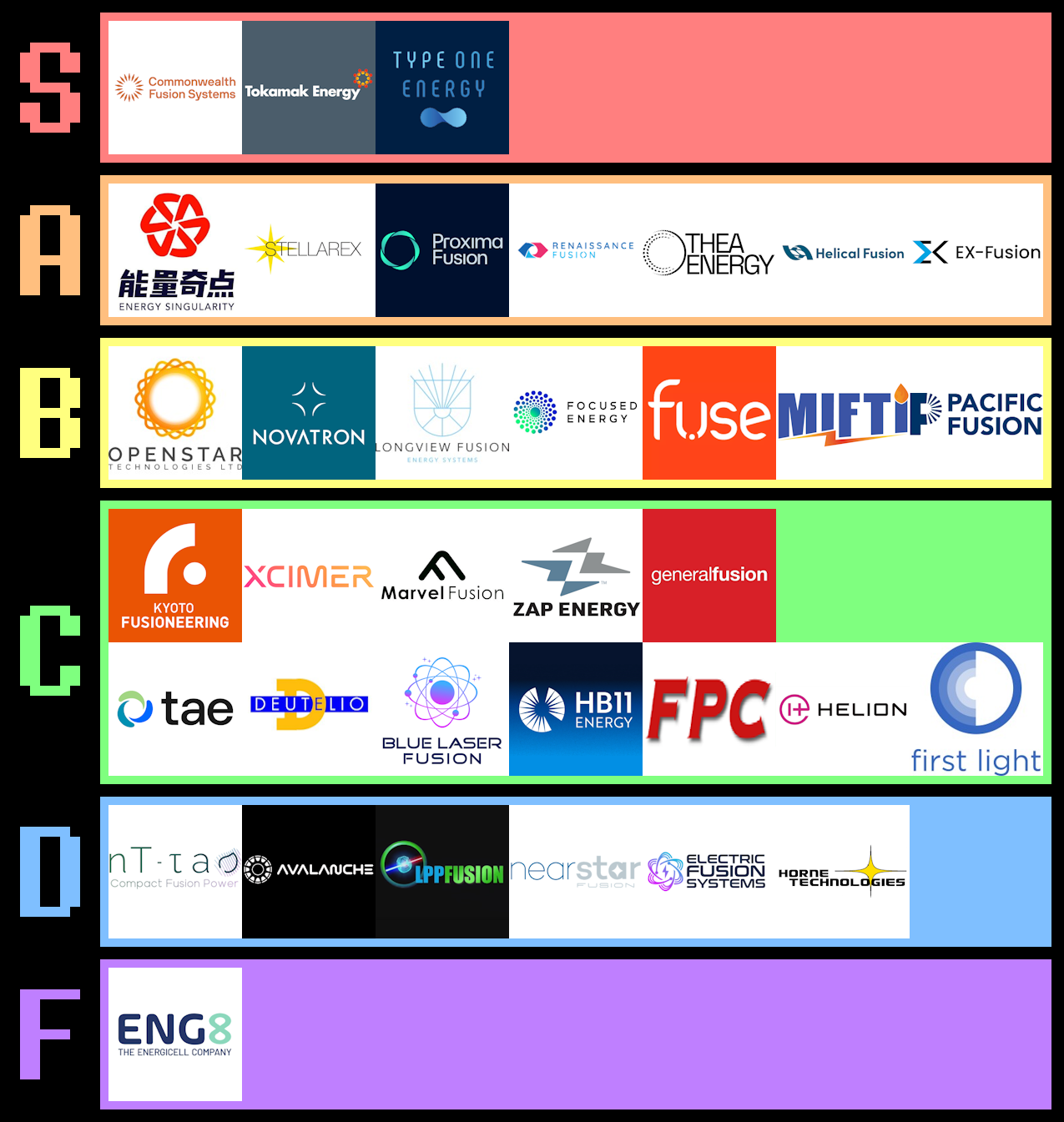
Fusion is a genuinely exciting technology that has a good shot at becoming reality within the next decade or two. But not all fusion energy companies are the same, and some are more describable as a scam than a private venture. That’s why I, the ultimate and unimpeachable authority on the matter, have taken it upon myself to compile a list and rank them from best to worst. To be more precise, I’m ranking them roughly in terms of how likely they are to be the first to put fusion energy on the grid – though like any good tier list it is going to be subjective in some places.
The tiers are S, A, B, C+, C−, D, and F. I thought I only needed six, which is why I left out E, but then after publishing the initial version I decided I wanted more resolution, so that’s why there’s two subtiers of C. I could shift D to E and C− to D and then call C+ just C, but I don’t really want to edit the image that much.
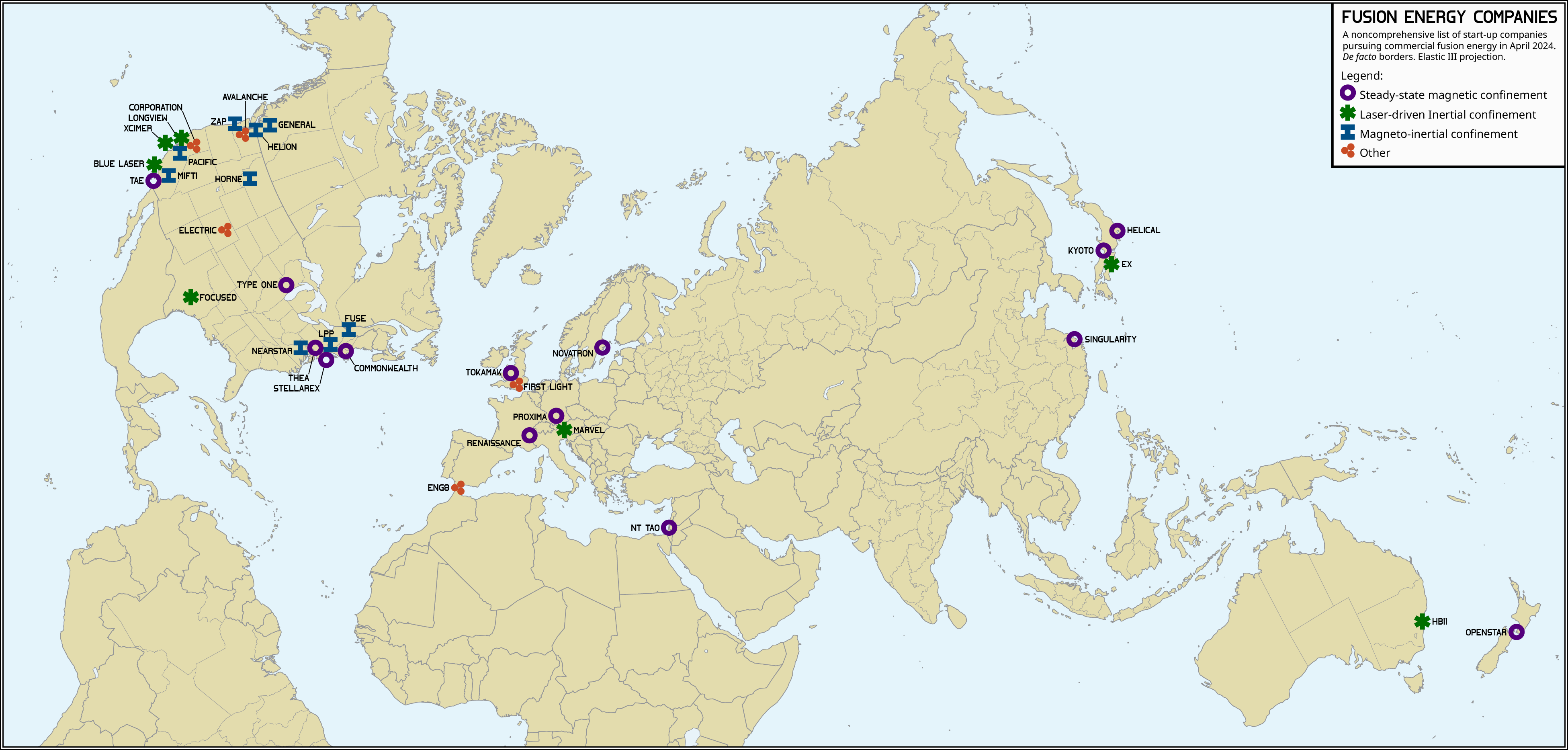
To be clear on the scope, this is a list of extant private start-ups. That means I’m not listing any nonprofit government- or university-affiliated labs like EUROfusion or Lawrence Livermore National Laboratory, I’m not listing large companies that are dabbling in fusion like General Atomics or Lockheed Martin, and I’m not listing companies that have already closed, like KMS Fusion or CTFusion. Also, this list is not comprehensive. I put in all of the companies I know of that I’ve seen at conferences or in the news, or that at least seem to have some amount of funding. But there are so many, and they’re popping up by the month now, so I apologize if you have a personal favorite that I didn’t include.
Commonwealth Fusion Systems (S)
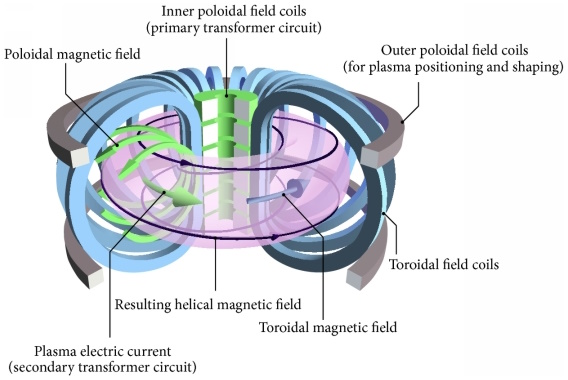
Let’s start with a classic. Commonwealth Fusion Systems is a company based in Devens, Massachusetts (near Boston), that spun out of and collaborates closely with the MIT Plasma Science and Fusion Center (the home of the Alcator tokamaks and the levitated dipole experiment). They’re currently building a tokamak with ReBCO high-temperature and high-field superconducting electromagnetic coils. ReBCO is a fairly recent superconductor technology that will allow Commonwealth’s tokamak to have stronger magnetic fields than even before seen, enabling improved performance.
As you’ll soon see, magnetic devices with high-temperature high-field superconducting coils (hence referred to simply as high-field devices) populate nearly half this list. What makes Commonwealth especially cool is that they helped to pioneer this technology. In 2021 they built the first ever electromagnetic coil to sustain 20 teslas of magnetic field strength over a tokamak-relevant volume and time-scale. So to a large extent, they (along with the National Ignition Facility) precipitated the private fusion company mania in which we’re currently living. And I think that makes them well worthy of S-tier.
Energy Singularity (A)
Energy Singularity is a Shanghai-based company planning to build a high-field tokamak. I don’t know as much about them as Commonwealth, but one fun fact is that one of their biggest funders is miHoYo, the developer of Genshin Impact. I’m tempted to say S-tier just for the waifus but as far as I can tell they haven’t actually built anything yet, so I’m putting them in A-tier.
Tokamak Energy (S)
Tokamak Energy is an Oxford-based start-up currently building a high-field spherical tokamak. A spherical tokamak is just a tokamak with a low aspect-ratio. In my opinion the differences between the two designs is not really worth delving into. Spherical tokamaks share regular tokamaks’ reputation for good confinement, so they go in S-tier with Commonwealth.
Stellarex (A)
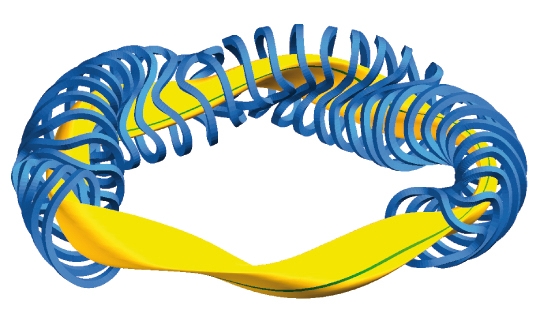
Stellarex is a Princeton-based company planning to build a high-field stellarator. Their CTO is stellarator mogul Mike Zarnstorff. The main advantage of a stellarator over a tokamak is the reduced risk of disruptions due to the lack of plasma current. Stellarators have traditionally been spurned by many in favor of tokamaks because their complicated coil shapes make them harder to build, and they have worse confinement than tokamaks on top of that. They’re seeing a resurgence today, though, because of advances in computational techniques that allow their coil shapes to be optimized like never before, producing configurations with theoretically better confinement than a tokamak.
Personally, I think it’s likely that stellarators will one day overtake tokamaks as the most economical fusion power plant design (assuming fusion power becomes economical in the first place). But right now, the manufacturing challenges of the coils make me skeptical that stellarators can make it to the grid first, unless the confinement boost provided by optimization turns out to be large enough in practice. I’m leaving it in A-tier.
Proxima Fusion (A)
Proxima Fusion is a Munich-based company also planning to build an optimized high-field stellarator. They work closely with the Max Planck Institute for Plasma Physics (the home of Wendelstein 7X) and they model their business plan off of EUROFusion (the intergovernmental organization building ITER), though I don’t know if that second one is a good sign or a bad one. A-tier.
Renaissance Fusion (A)
Renaissance Fusion is a Grenoble-based company also planning to build an optimized high-field stellarator. I don’t know much about them.
Type One Energy (S)
Type One is a company based in Madison, Wisconsin, spun out of the University of Wisconsin–Madison, that is also also planning to build an optimized high-field stellarator. They’re currently developing tube-shaped ReBCO cables to make the nonplanar electromagnetic coils easier to manufacture. They’re working closely with Commonwealth and the MIT Plasma Science and Fusion Center on this, which I think is also a good sign. S-tier for pushing the envelope of high-field coil technology.
Thea Energy (A)
Thea Energy, formerly known as Princeton Stellarators, is a Princeton-based company also also also planning to build an optimized high-field stellarator. They spun out of and collaborate with the Princeton Plasma Physics Laboratory (the home of NSTX (rip)). Their main distinction is that all of their coils are planar. That both reduces manufacturing difficulties in the same way Type One’s tube coils do, and makes it more likely they’ll be able to open the coils and replace the vacuum vessel like Commonwealth does.
The downside is that they need a lot more coils than they otherwise would; the vacuum vessel itself is covered in tiny field-shaping coils. The extra upside is that they’ll have quite a bit of active control over their plasma shape. It’s potentially an S-tier idea, but since they haven’t built anything as far as I know, I’m putting them in A-tier.
Helical Fusion (A)
Helical Fusion is a Tokyo-based company looking at the heliotron – a variation on the stellarator. Rather than many separate magnet coils, it has two long coils that wrap helically all the way around it. This is supposed to improve confinement, but it’s never been seriously studied outside Japan. I don’t think it’s too important a distinction; I’m putting it in A tier with the other stellarators.
TAE Technologies (C−)

TAE Technologies, formerly Tri-Alpha Energy, is a company based in Lake Forest, California (near Los Angeles), currently building a field-reversed configration. They’re the oldest company on this list, having opened way back in 1998. Unlike all of the companies listed thus far, which plan to use deuterium and tritium (DT) as the fuel, they’re planning to use protium and boron-11 (p¹¹B). I strongly disagree with this choice. It’s true that p¹¹B has clear advanages over DT – since there’s no tritium, TAE avoids having to work with radioactive fuel, and since it produces only alpha particles and no neutrons, TAE avoids having deal with neutron damage in their machine.
However, there is a major downside – the reactivity for p¹¹B fusion is about a thousand times lower, so it requires about ten times the plasma temperature. In other words, if a reactor can’t burn DT, it definitely can’t burn p¹¹B. It’s understandable that p¹¹B attracts so much interest, since a working fusion plant based on p¹¹B fusion would certainly be cheaper than a working fusion plant based on DT fusion. But the most immediate problem with fusion right now is not that of fuel cycles or neutron damage – it’s that of confinement. I’ll support research into advanced fuels like p¹¹B after a fusion reactor with significant power and energy efficiency has been demonstrated, but until then, investing in a p¹¹B company feels akin to trying to land a person on the Moon without having ever put one in orbit. Thus, I’m putting them in lower C-tier.
Kyoto Fusioneering (C+)
Kyoto Fusioneering is a company spun out of Kyoto University and based (strangely enough) in Tokyo, planning to build some kind of toroidal magnetic confinement reactor. Their website doesn’t make it clear what exactly it is. I’m putting them in C-tier purely because I don’t know enough about what they’re doing to be confident that it makes sense, but they’re at the top of C-tier. And that’s not to say I wouldn’t be willing to bump them up once they share more information with the public. I would actually put them lower, but I think it’s kind of hard to go wrong with DT toroidal magnetic confinement.
nT-Tao (D)
nT-Tao is a magnetic confinement company based in Hod Hasharon, Israel (near Tel Aviv). Like Kyoto Fusioneering, their website doesn’t say much about what exactly they’re doing. I’m putting them a tier lower, though, because they keep talking about their “proprietary topology” (some kind of combination of a tokamak and stellarator), which just sounds sus to me.
OpenStar Technologies (B)
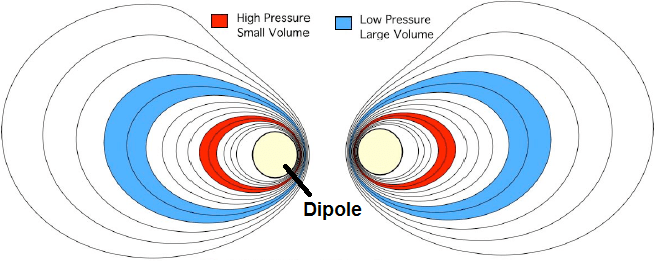
OpenStar Technologies is a Wellington-based company currently building a levitated dipole. Despite the very cool name, levitated dipoles are a fairly niche design, and as a result, they’re still notably more experimental than tokamaks and stellarators. They don’t have disruptions, so that’s nice, but I’m concerned about their ability to shield the electronics that are suspended inside the burning plasma. An interesting design, worthy of B-tier.
Deutelio (C−)
Deutelio is a company planning to build a “polomac”, which is like a levitated dipole where the dipole is really big and held in place with physical supports. They claim the supports will be encased in magnetic tunnels that keep them from contacting the plasma, but I’m not fully convinced they can do that without ruining the confinement. I’m putting it in C-tier.
Other interesting tidbits about Deutelio that contribute to it ranking below OpenStar and Kyoto are the fact that they plan to use deuterium–deuterium (DD) fusion (which is between DT and p¹¹B in terms of reactivity and number of neutrons produced) and that they plan to get most of their money by crowdfunding in cryptocurrencies. They actually don’t have a headquarters location yet because they’re still looking for a country with sufficiently lax finance laws.
Novatron Fusion (B)
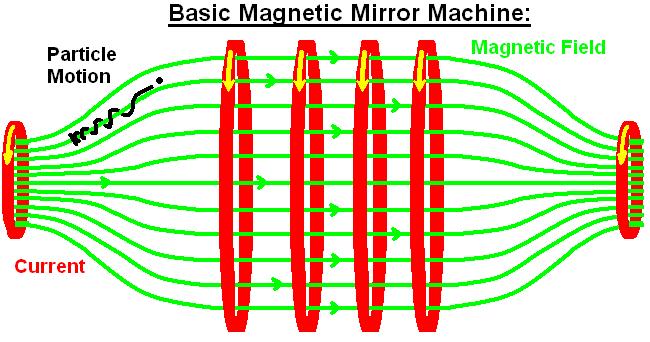
Novatron Fusion is a Stockholm-based company planning to build a high-field magnetic mirror machine. A magnetic mirror is one of the simplest magnetic confinement designs, and was one of the first to be studied. The problems are that in practice you lose a lot of particles out the ends, and the whole thing is also unstable.
Novatron proposes that the first problem can be fixed by simply using ReBCO superconducting coils to increase the peak magnetic field. For the twoth problem, they plan to add an electrically charged rod in the middle of the device to generate an electric field and drive rotation, which should suppress the instability. As far as I know this rotating magnetic mirror concept is still untested, making me skeptical, but at least the basic mirror design is well understood. B-tier.
Avalanche Energy Designs (D)
Avalanche Energy Designs is a Seattle-based company planning to build an electrostatic ion trap with a weak external magnetic field. Ion traps are nothing new, and they’re known to not be very good, so I’m not sure what makes them expect it to be economical. It’s not like an ion trap benefits from high-field coils. They’re also planning to use DT but don’t have a blanket so I don’t know how they plan to capture the neutron energy. Highly dubious all around; squarely in D-tier.
Longview Fusion (B)
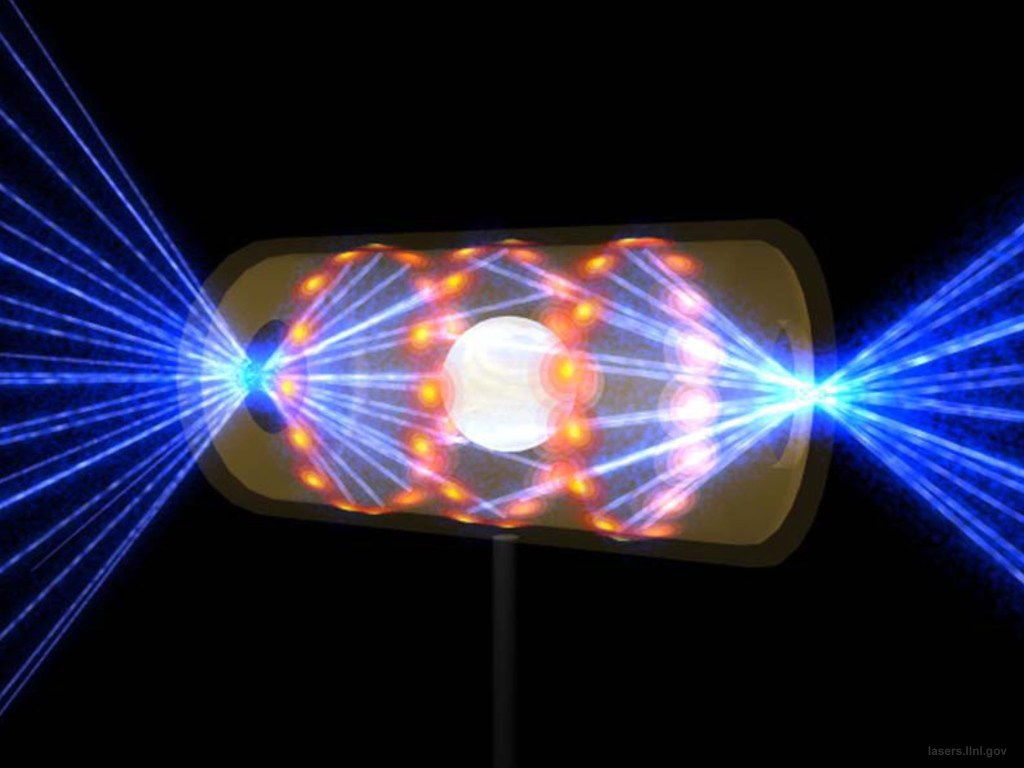
And that concludes the steady-state companies! Next is inertial fusion designs.
To start off, Longview Fusion is a company based in Orinda, California (near San Francisco), planning to build a laser indirect-drive reactor. Laser indirect-drive (and inertial fusion more generally) was relatively unpopular until 2021, when the National Ignition Facility (a US government laboratory in Livermore, California) used it to briefly achieve a self-sustaining fusion reaction in the laboratory for the first time in history. Since then, numerous companies have arisen looking to use that same design for energy production. Longview is one such company. Notably, its CEO and founder is Ed Moses, the former head of the National Ignition Facility (NIF).
While laser indirect-drive is notable for its excellent experimental performance, it has several challenges that make me hesitant to rank it too highly. The main one is repetition rate. The highest performing NIF shots today produce less than 10 megajoules of energy. With further development, a similar design could perhaps reach 100 megajoules. It can only do about one shot per day, though. An economical power plant will need to put out at least 100 megawatts of power, meaning it will need to do at least one shot per second. Currently, the NIF spends over an hour extending each target on a tiny arm into the middle of the target chamber and then carefully aligning it to make sure it’s perfectly centered. Maybe someday it will be possible to drop the target from the ceiling and adjust the laser pointing on the spot to hit it mid-fall, but I don’t see that happening any time soon. Thus, I’m putting Longview in B-tier.
Blue Laser Fusion (C−)

Blue Laser Fusion is a company based in Goleta, California (near Los Angeles), planning to build a laser direct-drive reactor. Direct-drive is interesting because it has more stringent symmetry constraints, but when it does work it’s significantly more energy-efficient. Even though direct-drive hasn’t had the same experimental success as indirect-drive, it has been extensively studied at many facilities including the NIF, and I think it’s about as likely to work out for energy production.
Their website makes it look like they only plan to have beams on the equator, which I’m pretty sure would not provide remotely acceptable symmetry, but I’ll assume that’s just artistic license. Lower C-tier because they’re planning to use p¹¹B.
Focused Energy (B)
Focused Energy is another laser-driven fusion company, with dual headquarters in Austin, Texas, and Darmstadt. Their stated intention is to use proton fast ignition. Fast ignition would, by all accounts, be far superior to hot-spot ignition (which both Longview and Blue Laser are pursuing) for electricity generation, as it would have better energy efficiency and looser symmetry requirements. Unfortunately, it’s proven difficut to implement in practice.
Focused Energy has a good number of reputable scientists from the field on their staff list, including Stefano Atzeni, the progenitor of hot-spot ignition himself. That said, they ultimately face the same repetition rate challenges as Longview does, so it goes with them in B-tier.
EX-Fusion (A)
EX-Fusion is another laser inertial fusion company, based in Osaka. The name is a little strange, but they’re Japanese so perhaps that’s to be expected. One interesting thing about them is that they’re intentionally planning projects that will be valuable to the global inertial fusion effort even if their own reactor doesn’t work out. I think that’s admirable enough to bump them to A-tier.
Xcimer Energy (C+)
Xcimer Energy is a company based in Redwood City, California (near San Francisco), planning to build a laser inertial fusion reactor. What makes them unique is that they plan to only have two laser beams, firing in opposite directions. To get the symmetry right, they’ll need to use both indirect-drive and direct-drive, as well as shape the beam profiles very carefully. It’s a cool idea, but I think there’s too many outstanding risks for it to rise above C-tier.
HB11 Energy (C−)
HB11 Energy is a Sydney-based company planning to build a laser direct-drive reactor with proton fast ignition. I might be willing to put them in B-tier for the fast ignition alone, but as you may have guessed from the name, HB11 is also planning to use p¹¹B. Automatic C-tier.
Marvel Fusion (C+)
Marvel Fusion is another mystery company, based in Munich. They have revealed that they plan to use lasers and structured foam targets, but not much else. C-tier, pending further details.
Fusion Power Corporation (C−)
Fusion Power Corporation is a company based in Sacramento, California, planning to build ion beam direct-drive. They’re like Focused and Blue Laser, but instead of lasers they’re using ion beams. Ion beams get around some of lasers’ technical complications relating to laser-plasma interactions, but suffer from space charge density issues that limit how focused they can be. In my opinion the challenges associated with lasers are proving to be relatively manageable, so switching to ion beams now doesn’t make sense. Also, they have the most generic name imaginable. Lower C-tier.
Fuse Energy (B)
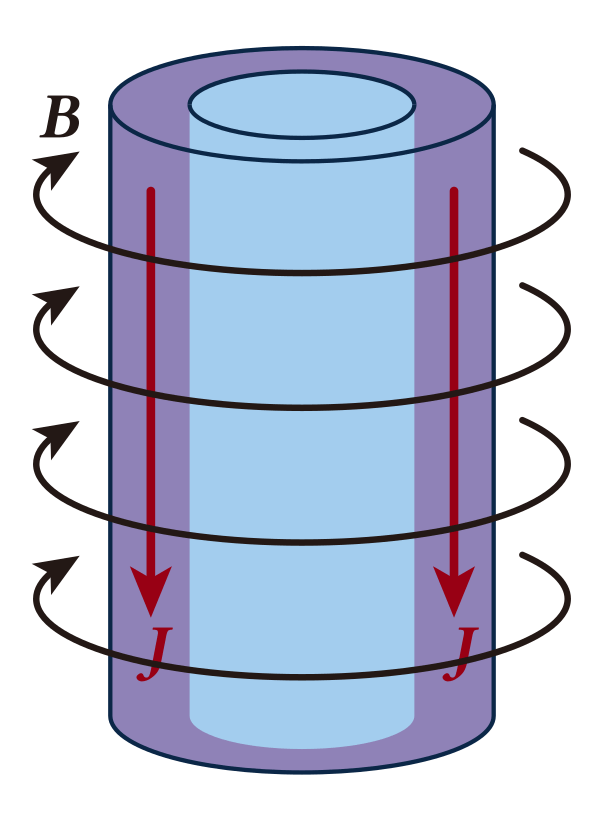
And now for the third main class of fusion designs, magneto-inertial fusion, starting with Fuse Energy.
Fuse is a company based in Napierville, Quebec (near Montreal), building a reactor to do magnetized liner inertial fusion (MagLIF), a well-known subcategory of the z-pinch design. MagLIF has enjoyed a decent amount of study over the decades, though has never been as popular as purely magnetic fusion. It achieves pretty good levels of confinement generally, but like magnetic confinement, it has never achieved a self-sustaining reaction in the laboratory, and like inertial confinement, it faces major challenges related to repetition rate.
Overall, it’s a grounded design, but I don’t see a reason to expect any breakthroughs from MagLIF in the near future. That, along with a name less generic than ”Fusion Power Corporation” but not by much, puts Fuse in B-tier.
Magneto-Inertial Fusion Technologies Inc. (B)
Rounding out our trio of generically named companies is Magneto-Inertial Fusion Technologies Inc. (MIFTI). MIFTI is a MagLIF company based in Tustin, California (near Los Angeles). Unlike Fuse, they’re pursuing staged MagLIF. I’m not familiar with the concept, but based on the website it sounds like they just run multiple current pulses through the fuel column to better control the compression. An unusual idea, but it doesn’t sound terribly risky. B-tier along with Fuse.
Zap Energy (C+)
Zap energy is a Seattle-based company planning to build a “shear flow stabilized” z-pinch. Unlike MagLIF z-pinches, their target is not a physical object. Instead, they shoot a burst of gaseous fuel into a vacuum chamber where it contacts an anode and conducts enough electric current to implode. This helps with the challenges of repetition rate, since all they need to do to prepare each target is turn on the gas pump. The gas velocity field will also help suppress the instabilities that normally limit z-pinch performance.
It’s a theoretically sound idea, but since it’s so different from what’s been done in the past, I don’t think there’s currently any reason to expect it to work. On the other hand, their website is pretty phenomenal. It has a movie that only advances when you scroll down, and the speed it plays at is proportional to the speed you scroll. Overall, upper C-tier.
LPPFusion (D)
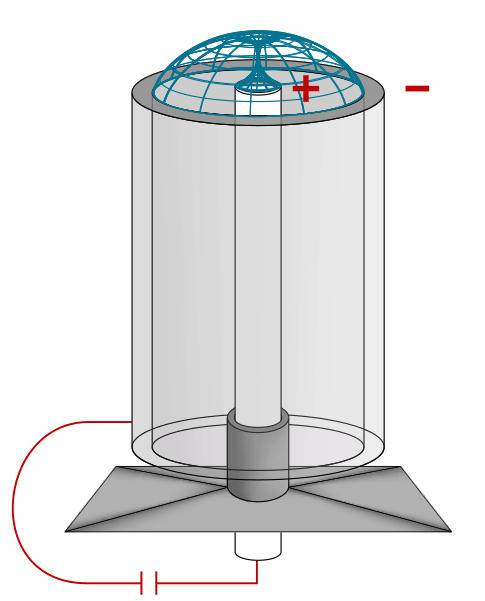
LPPFusion is a company based in Middlesex, New Jersey, planning to build a p¹¹B dense plasma focus. Dense plasma focuses are another type of z-pinch not dissimilar to Zap’s, but LPPFusion has very interesting ideas about what will happen when they turn it on. They claim that the fuel column, upon compressing due to the electric current, will twist into a helix, then tie itself into a knot, then shoot an ion beam out one end and an electron beam out the other. Note that this is not how z-pinches work. Well, the ion beam part is real, but it’s driven by electromagnetic fields, not fusion reactions, so it’s not useful as an energy source.
They also claim that their rejected papers refuting the Big Bang theory are being censored by the cosmologic establishment. A D-tier fusion company for sure, and probably my favorite on this list.
Pacific Fusion (B)
Pacific fusion is a company based in Fremont, California (near San Francisco). Their head of experiments is Alex Zylstra, who was the experimental lead for the first self-sustaining fusion reactions on the NIF. The details of their design are not publically known, but I have some insider knowledge that makes me comfortable putting them in B-tier.
General Fusion (C+)
General Fusion is one of the more well-known fusion start-ups, as they frequently attended scientific conferences before it was common for start-ups to do so. Based in Vancouver, they’re currently building a tokamak surrounded by a rotating liquid metal wall that gets rapidly compressed by pistons, in turn compressing and heating the tokamak. It’s pretty out there, to be sure, though they’ve actually reigned it in quite a bit compared to what they had a few years ago. Still, like Zap, it’s too untested for me to take it very seriously. Like Zap, upper C-tier.
Helion (C−)
Helion is a company based in Everett, Washington (near Seattle), that is currently building two field reversed configurations that get shot at each other. They made headlines last year for promising to sell Microsoft electricity by 2028. For fuel, they plan to use deuterium and helium-3 (D³He), which has a higher reactivity than p¹¹B but still a much lower one than DT. Helium-3 is especially interesting as a fuel choice because it does not occur on Earth; it has to be synthesized from lithium (technically you synthesize tritium and then wait for it to decay into helium-3), or harvested from the moon. Helion proposes that because D³He doesn’t produce very many neutrons, they can do direct energy conversion (instead of using a thermal cycle like coal plants, fission plants, and most of the proposed fusion plants on this list use), which will drastically improve the energy efficiency. Unfortunately, direct conversion is still a largely undeveloped technology. Also, if you go to their technology page, they have the same scrolling movie thing as Zap! Lower C-tier for both the unusual design and the unusual fuel choice; kudos for the website.
First Light Fusion (C−)
First Light fusion is the first “projectile fusion” company, based in Culham, Oxfordshire (near Oxford). They’re currently building a reactor that comprises a metal disc that gets shot at a plastic cube with a fuel-filled bubble in it. The disc generates a shockwave in the cube that gets focused around the bubble, compressing and heating it. Given the difficulty the NIF has had using carefully sculpted laser pulses to compress spheres of fuel, I’m very skeptical First Light can do the same thing with better energy efficiency using only a single shockwave. C-tier, just barely.
NearStar Fusion (D)
NearStar Fusion is the second projectile fusion company, based in Chantilly, Virginia (near Washington, DC). Their design, as depicted on their website, is one of the more confusing ones I’ve seen. They have two cylindrical capsules filled with deuterium, and they shoot them at each other, and when they collide, one of them gets magnetized and then compresses symmetrically on all three axes. This is… not how collisions work. Or magnetic fields, for that matter. D-tier for violating the laws of physics.
Electric Fusion Systems (D)
Electric Fusion Systems is a company based in Broomfield, Colorado (near Denver), planning to do what I can only describe as electromagnetically confined warm fusion. They propose that they can achieve a fusion reaction at lower temperatures than other companies by putting their plasma in the Rydberg phase. I think it’s safe to say that any design that depends on an exotic phase of matter is a D-tier investment.
Horne Technologies (D)
Horne Technologies is a company based in Elliston, Montana, currently building what they describe as a “hybrid” approach incorporating “inertial electrostatic heating” with a high-field “magnetically shielded grid”. In the absence of further details, it just sounds even susser than nT-Tao, and I must put them in D-tier.
ENG8 (F)
ENG8 is a Gibraltar-based company pretending to have built a cold fusion reactor. They claim to have achieved an engineering gain of 5, and that this result was verified by the workplace safety certification organization UL Solutions. Aside from the fact that cold fusion was disproven decades ago, UL Solutions has also denied any such verification. I’m making them the only F-tier company because of the whole not being real thing. At least the other fusion companies will probably fail in good faith.
Conclusion
And that’s all of the extant private fusion start-ups I know about! At the end of the day, none of these are guaranteed to work, and as such we shouldn’t rely on fusion – or any emerging technology for that matter – to solve climate change. Regardless of whether projectile fusion becomes a reality in the next ten years, we’ll still need a carbon fee and dividend in all major economies if we want to meet our climate goals. But that’s not to say in fusion isn’t worth investing.
Overall, I think there’s reason for optimism in this space. I think fusion energy can be extremely impactful if it works out, and personally I really hope I can work at one of the A- or S-tier companies once I finish school this coming year. But of course that doesn’t mean that every fusion company is worth its hype. Remember, kids: always check your private ventures before you cheque your private ventures, keep WAGMIing your diamond hands, and don’t listen to Big Cosmology’s Big Bang lies. Stay flat, comrades.
Edit: I moved First Light Fusion from D-tier to C-tier because I realized there’s a bigger gap between First Light and most D-tiers than between First Light and most C-tiers, with respect to the number of papers they publish and conferences they attend.
Edit: Apparently the ion beam and electron beam that LPPFusion talks about is a real feature of dense plasma focuses, though not useful for energy production.
Edit: I added a bit of refinement to C-tier. I didn’t want to redo my whole system, so I’m just calling the two levels C+ and C−.
Edit: I corrected the text to reflect that Focused Energy is pursuing proton fast ignition, not hot-spot ignition.
 Wuslopebology
Hey Justin,
I’m interested in where you would rank Helion on this tier list and why?
Hi Luc, it’s in C-tier, mostly because of the fact that they’re starting with an advanced fuel cycle rather than DT.